Commonwealth Vault

Hargreaves Street Auckland

Some things are too important to leave at home.

Safety deposit boxes in central Auckland, for the documents, keepsakes and valuables you would never want to replace.

See the facility and compare box sizes before deciding.

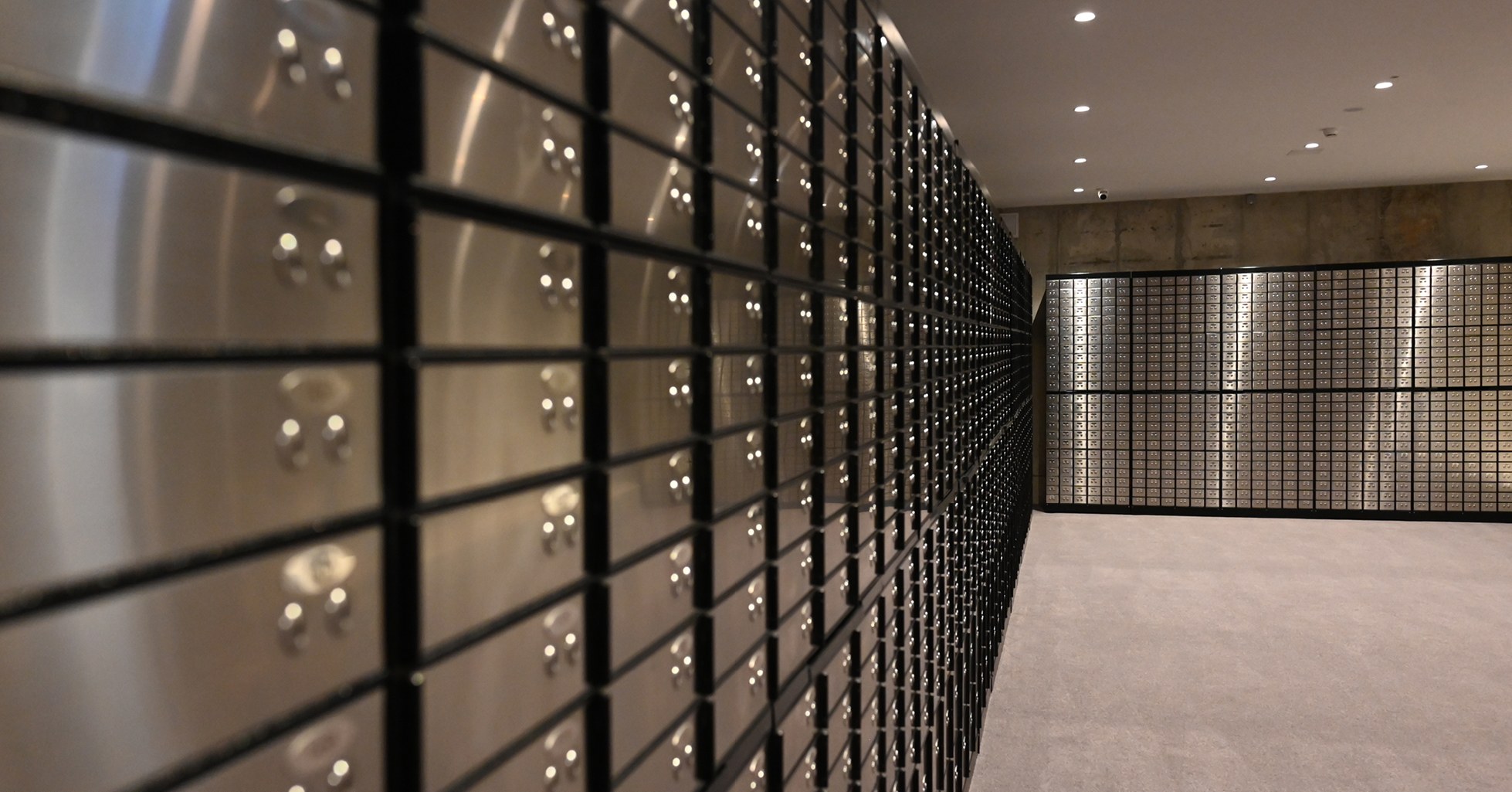
The safe deposit room at Hargreaves Street: a long wall of brushed-steel boxes receding in perspective beneath ceiling lights, with a second bank set into a concrete wall at the far end.
The safe deposit room, Hargreaves Street.

Most households have a handful of things that matter far more than their price. An original will. The deeds to a property. A ring that has been in the family for three generations. Medals, letters, a passport you need twice a decade.

For a long time, the default has been to keep these things somewhere in the house — a drawer, a filing box at the back of a wardrobe, a home safe bolted to the floor. That works until it doesn't. Homes are busy places. Things are moved, misplaced, lent, flooded, or simply forgotten about when life changes.

Hargreaves Street is Commonwealth Vault's Auckland facility. It exists to give people a quiet, private and properly secure place to keep what matters, separate from the home, and to make that straightforward for people who have never used a safety deposit box before.

This page explains how safety deposit boxes work, what people tend to keep in them, what the facility is like, and what happens if you decide to come and see it. If you would rather just talk it through, a private viewing is the easiest first step.

01Why it comes up

Secure storage usually becomes relevant at a turning point.

In short

People rarely look for a safety deposit box out of fear. More often, something in their life has changed.

Very few people wake up one morning and decide they need a safety deposit box. It tends to come up quietly, when something prompts a second look at where important things are kept.

Estate planning and inheritance

Making or updating a will often brings the question into focus. Your lawyer may hold a copy, but the original documents, and the items the will refers to, still need a home. People who have recently inherited jewellery, coins or family papers face the same question from the other side: these things were looked after by someone else, and now they are yours to look after.

Moving, renovating or travelling

A house move, a renovation with tradespeople coming and going, or a long period overseas all leave a home less settled than usual. Many people use a safety deposit box during those periods simply so they can stop worrying about one particular envelope or case.

Things accumulate

Jewellery collected over decades, a growing pile of property and business paperwork, a set of medals that has passed down the family — none of it arrives all at once. At some point it is worth stepping back and asking whether the bedside drawer is really the right place for it.

Keeping things for the next generation

Some possessions are held in trust in everything but name. They belong to a family more than an individual, and the person looking after them wants to know they will still be intact, and easy to find, when it is time to hand them on.

02How it works

What a safety deposit box actually provides.

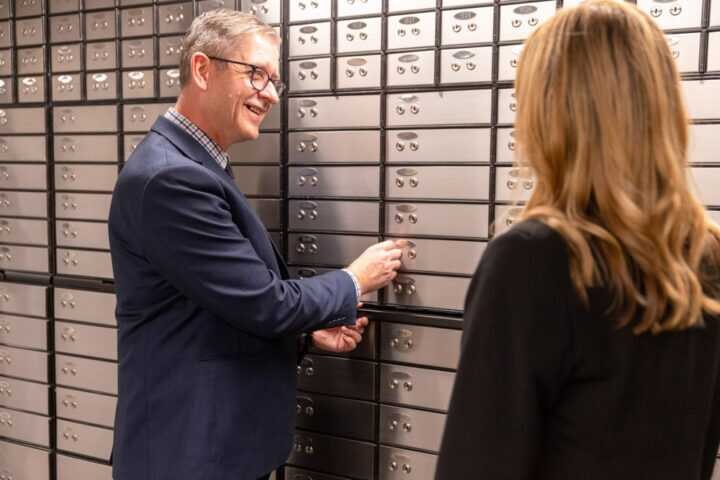
A team member shows a customer her safety deposit box in the vault at Hargreaves Street.
Boxes are opened with a member of the team, in private.

A safety deposit box is a locked, individually allocated container kept inside a purpose-built vault. You rent the box, you decide what goes in it, and you are the person — along with anyone you formally authorise — who can access it.

Physical separation from the home

The most basic benefit is also the most important. Your things are no longer in the same place as everything else you own. Whatever happens at home, they are elsewhere, in an environment designed for the job.

Controlled, private access

Access to the vault is managed. When you visit, your identity is confirmed, your box is retrieved, and you can open it in a private room. Staff do not need to know what you keep inside.

Built for things that are difficult to replace

A home safe is a sensible first step, but it is still in your home and is usually designed to slow down a casual opportunist. A vault is a different kind of environment, with structural protection, managed entry and monitoring as its whole purpose. That matters most for things where a replacement is impossible, slow, or expensive to arrange: original legal documents, irreplaceable family items and physical assets.

A safety deposit box is not a bank account, and it is not an insurance policy. It is a secure physical place. Many customers choose to arrange contents insurance separately, and we are happy to explain how others approach that.

03The facility

Hargreaves Street, Auckland.

Address

Hargreaves Street, Auckland
[To confirm: street number, parking and opening hours]

Hargreaves Street is a dedicated safety deposit facility rather than a counter tucked into the back of another business. It was developed because demand for private, independent secure storage in Auckland has grown as many banks have reduced or withdrawn their own safety deposit services.

The building has been fitted out specifically for this purpose, with a secure vault, controlled entry and private rooms where customers can spend time with their box without being observed. [To confirm: year opened and fit-out details]

What visiting is like

It is calmer than most people expect. You arrive, a member of the team confirms who you are, and your box is brought to a private room. You can take as long as you need. When you are finished, the box is returned to the vault. Many customers describe it as closer to visiting a quiet library than a bank.

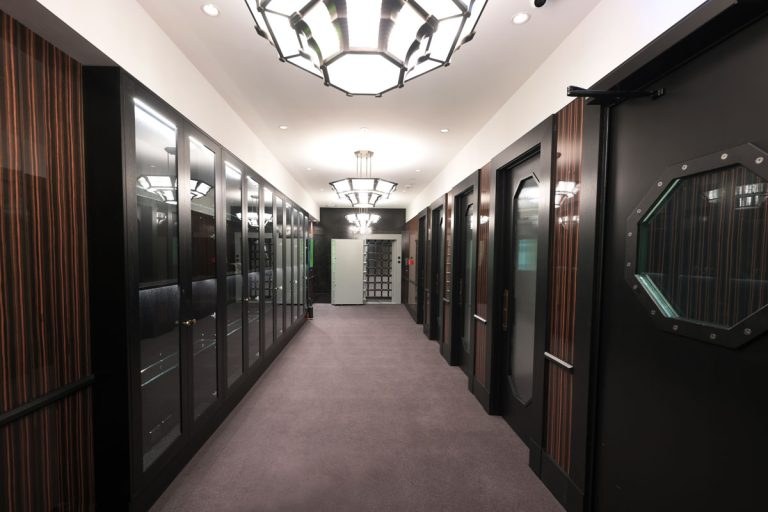
The corridor to the private viewing rooms at Hargreaves Street, with timber-lined doors and soft lighting.
The private rooms where customers open their box, Hargreaves Street.
You can take as long as you need. Nobody needs to see what is inside.

04What people keep

What people protect, and why it matters to them.

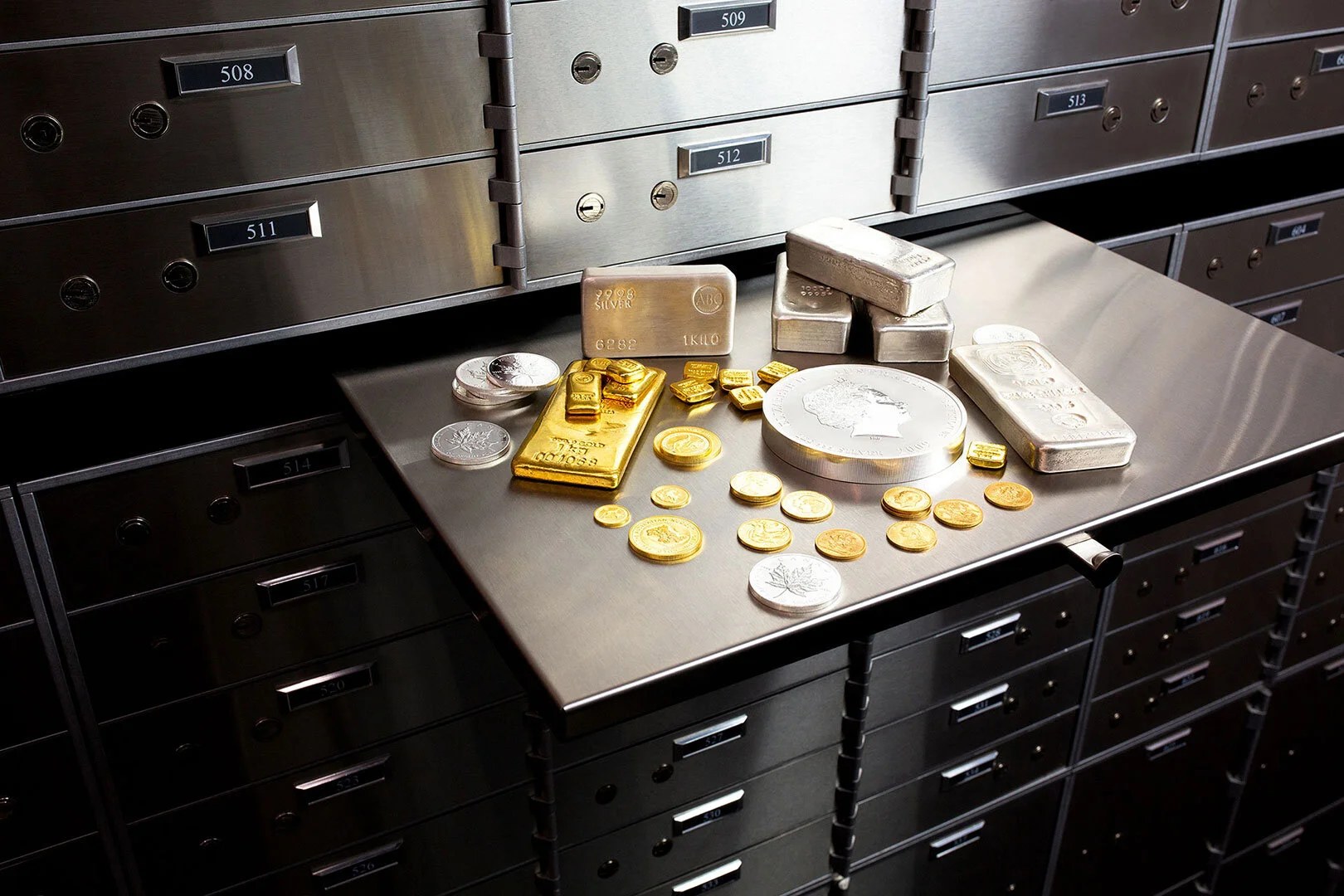
Gold and silver bullion and coins laid out on the tray of a safety deposit box drawer, with numbered boxes behind.
Value is not only financial. Most boxes hold a mixture.
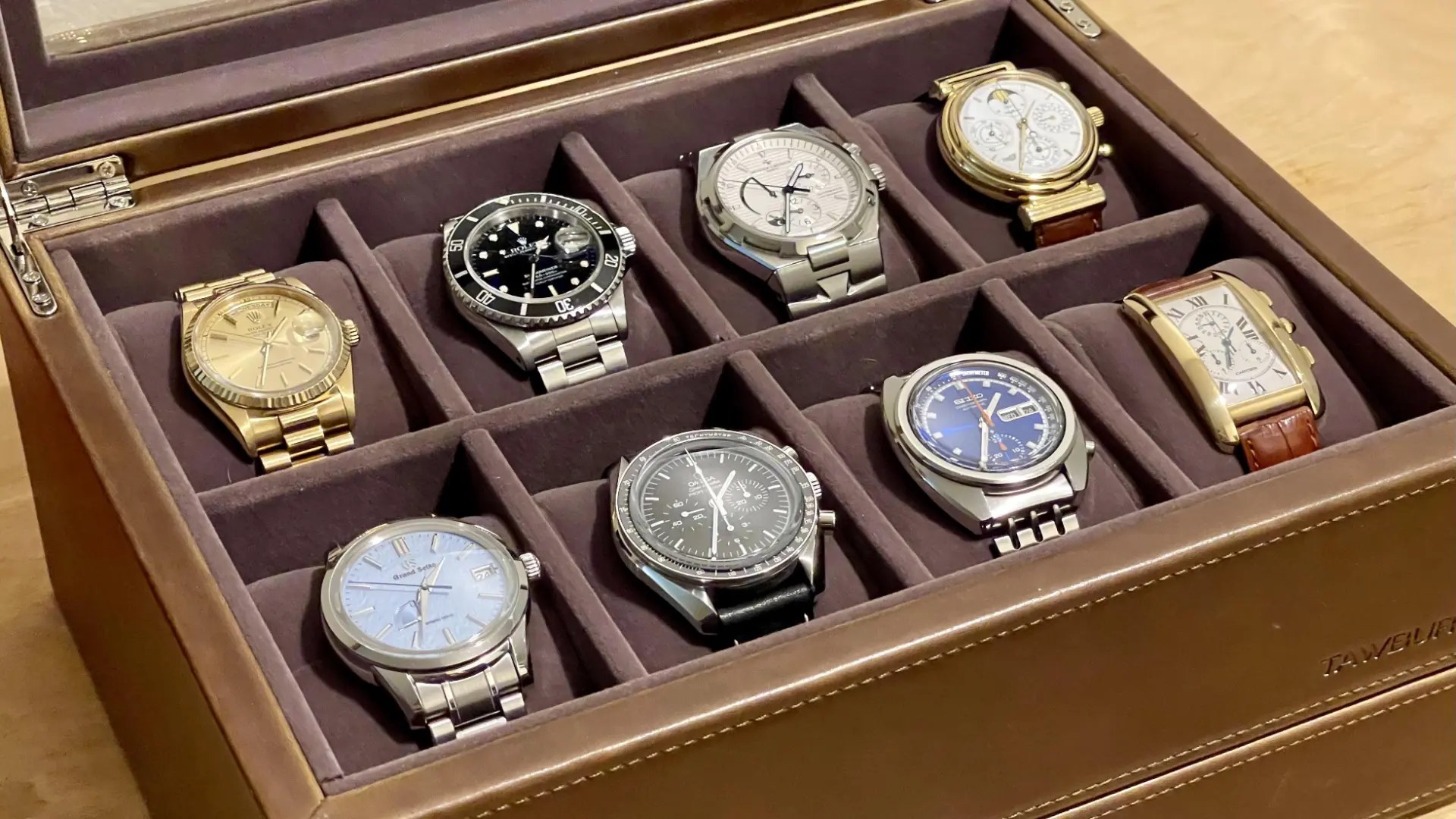
A collection of wristwatches arranged in a leather storage case.
Watches and collections are among the most common contents.

Original legal documents

Wills, enduring powers of attorney, property titles, trust deeds and share certificates. Copies are useful, but the original is often what counts, and replacing one can take months and legal fees.

Passports and certificates

Birth, marriage and citizenship certificates, and passports you do not use day to day. These are the documents you only notice when you need them urgently and cannot find them.

Jewellery

Pieces worn on special occasions, pieces kept for children or grandchildren, and pieces that are simply too significant to leave in a jewellery box on the dresser.

Heirlooms, medals and family items

Service medals, letters, photographs, watches that belonged to a grandparent. These rarely have a market value that reflects what they mean, which is exactly why they cannot be replaced.

Business records

Original contracts, company seals, intellectual property records and anything a business would struggle to operate without. Some owners keep a box purely as part of their continuity planning.

Digital backups

External drives, encrypted keys and recovery codes. Storing a copy away from the home means a single event cannot take out both the original and the backup.

Precious metals and other valuables

Coins and bullion are compact but heavy, and many owners prefer not to keep them at home. Other customers store collections, cash reserves or items they are holding on behalf of family.

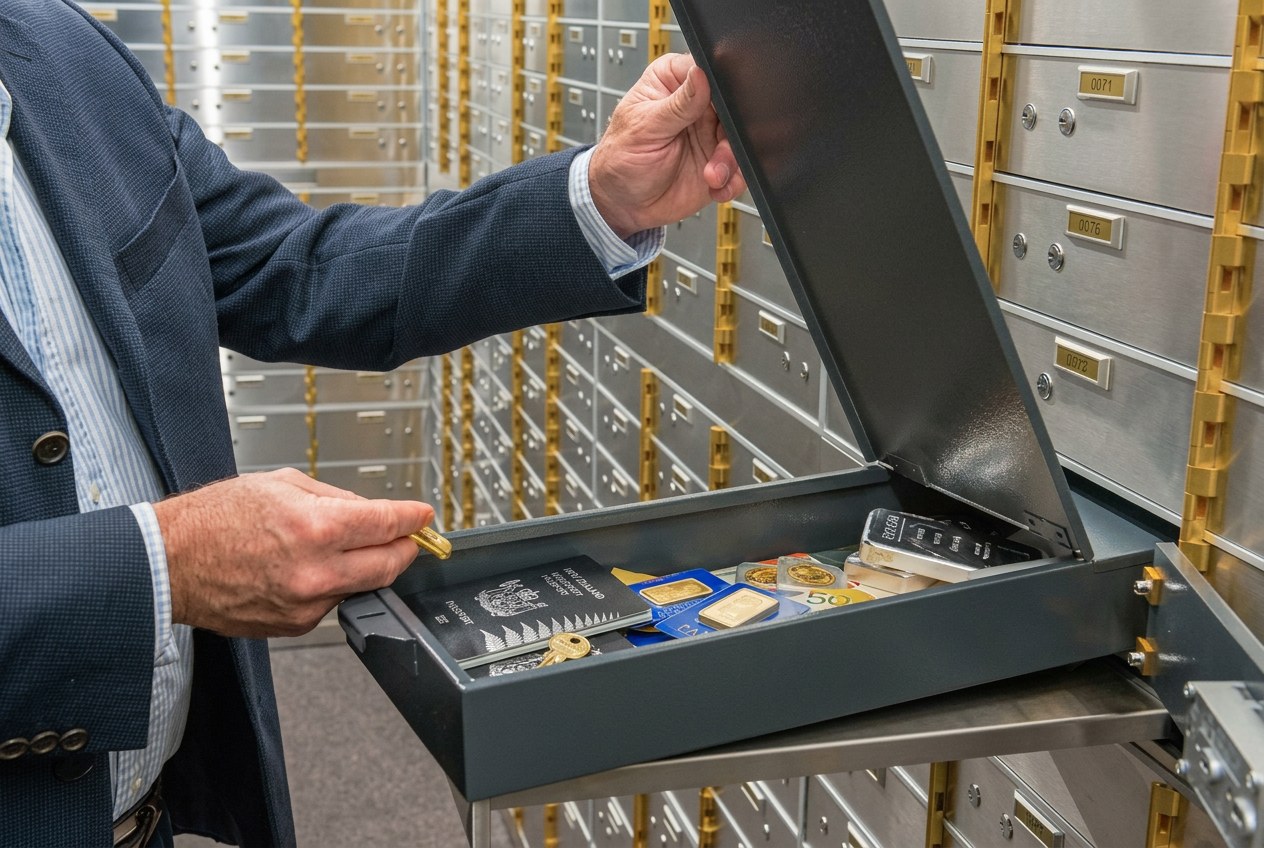
A customer opens his safety deposit box drawer, which holds New Zealand passports, gold bullion and keys.
Every box is opened in private, in the vault.

05Security and privacy

Security that is explained, not just claimed.

Good secure storage rests on a few simple principles: make the contents physically hard to reach, make sure only the right people can get near them, keep a record of every visit, and respect the customer's privacy throughout.

Physical protection
The vault structure and door. Specific details to be confirmed by Commonwealth Vault.
Controlled entry
How access to the building and vault is managed. Specific details to be confirmed by Commonwealth Vault.
Identity on every visit
How customers are verified before a box is retrieved. Specific details to be confirmed by Commonwealth Vault.
Monitoring
How the facility is watched around the clock. Specific details to be confirmed by Commonwealth Vault.
Privacy
Boxes are opened in private rooms; staff do not record contents.

We would rather show you than describe it. During a viewing you can see the access arrangements for yourself and ask whatever you like about how the facility is protected.

06Choosing a box

Find the right box for what matters.

Compare the published box sizes and indicative annual rentals below. Start with the things you want to keep, then consider their dimensions and packaging; you can discuss fit with the team before deciding.

Client review concept. Prices are illustrative and have not been confirmed by Commonwealth Vault.

Annual rental in NZD, not outright ownership. GST, fees, Hargreaves availability and final terms to confirm.

Mini

Annual rental
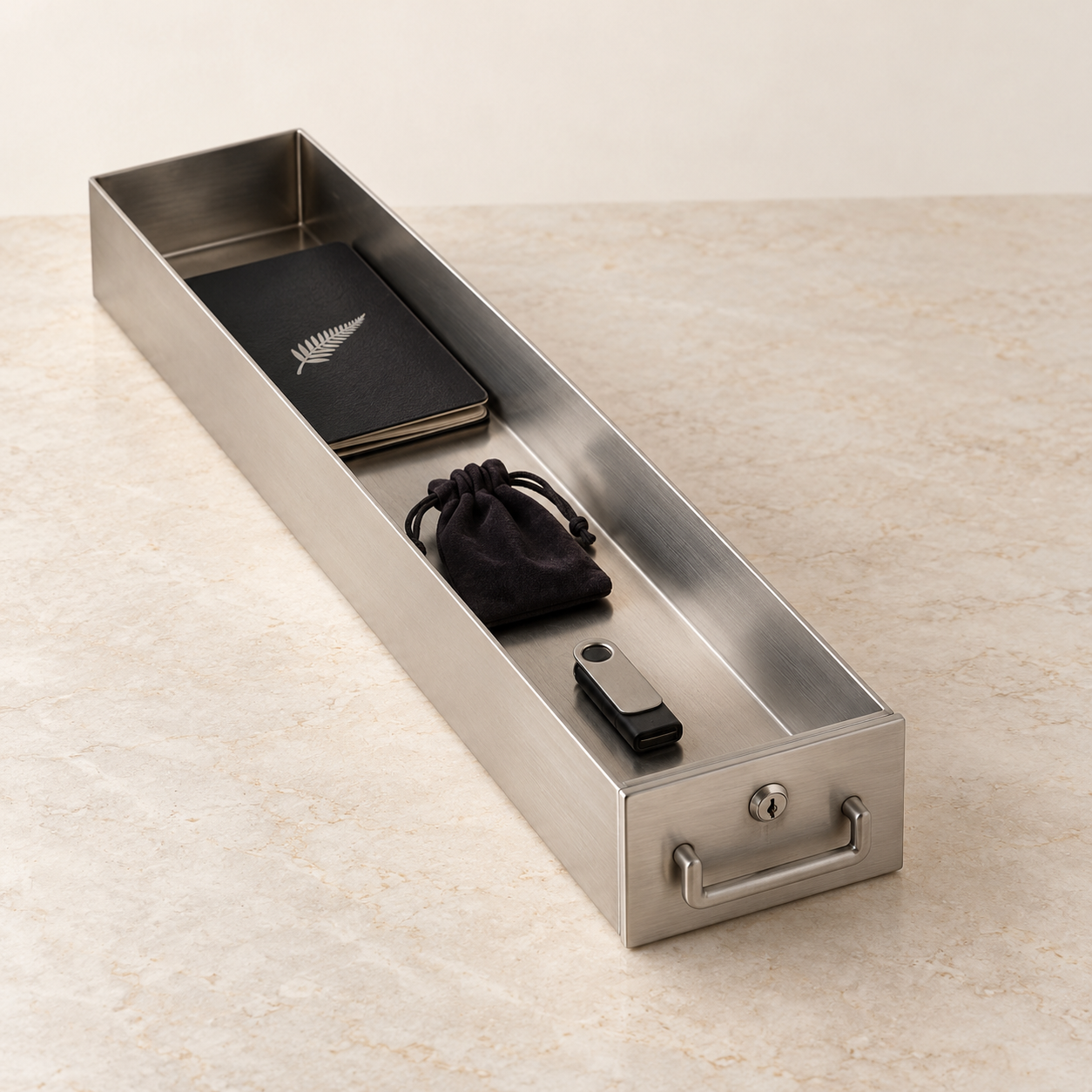
Representative image of a long, narrow brushed-steel Mini box holding a passport, a small drawstring jewellery pouch and a USB drive
Representative image

NZ$350per annum

Indicative annual rental · NZD

A compact home for the small things you would find hardest to replace.

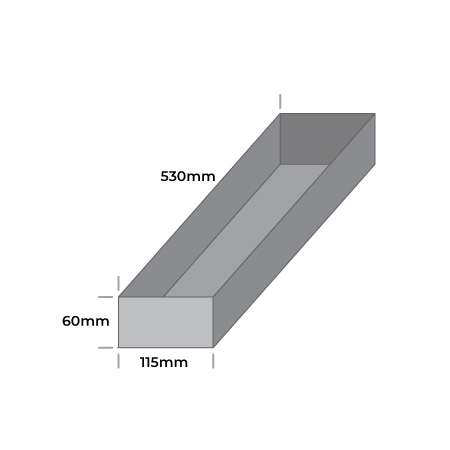
60 × 115 × 530 mm

Internal sleeve measurements

View dimensionsOfficial Commonwealth Vault illustration of the Mini box and sleeve, internal sleeve measurements 60 × 115 × 530 mm

Suitable for

  • Passports and folded certificates
  • Rings, earrings and jewellery pouches
  • USB drives, spare keys and small keepsakes
Order this box

Small

Annual rental
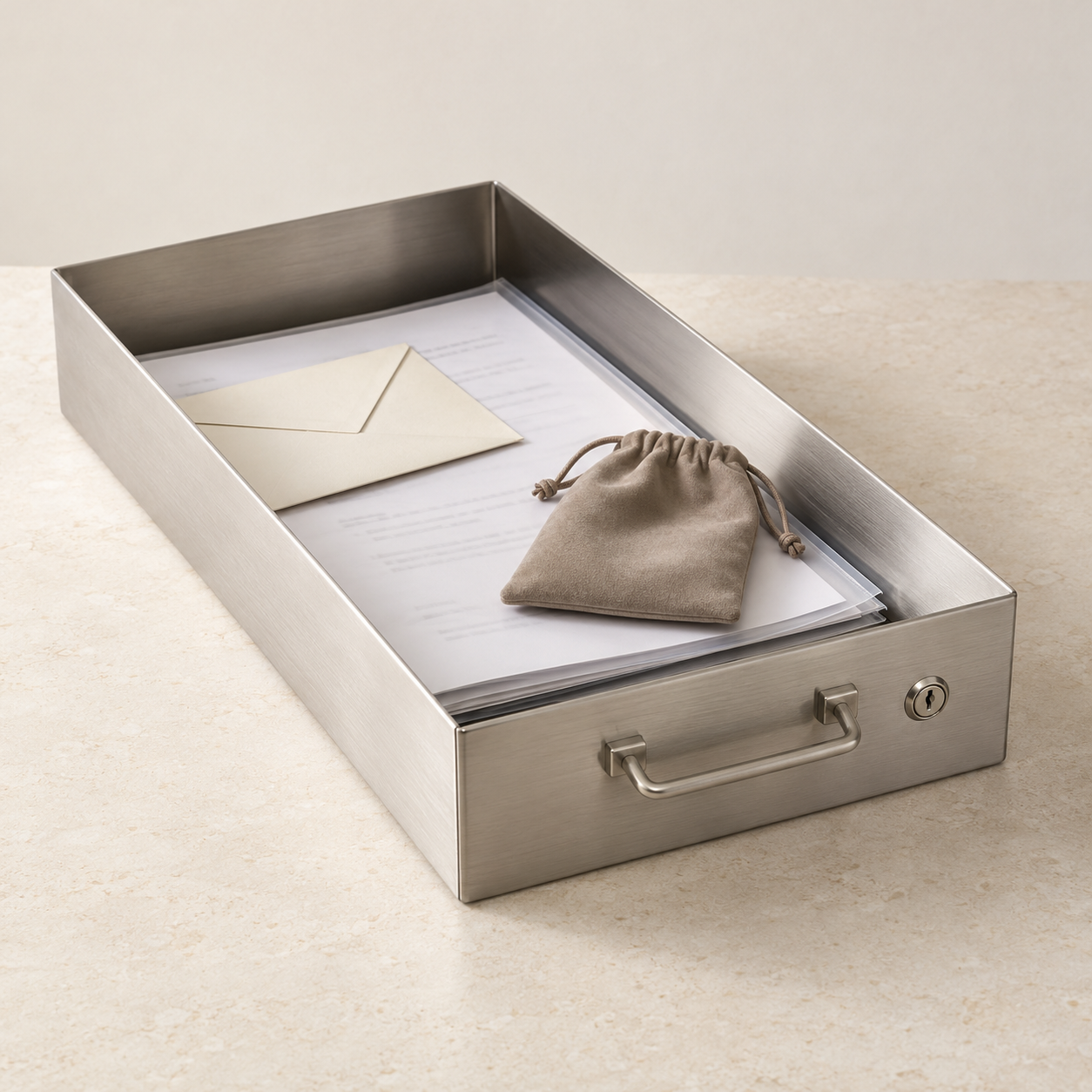
Representative image of a shallow brushed-steel Small box holding flat A4 papers, an envelope and a jewellery pouch
Representative image

NZ$450per annum

Indicative annual rental · NZD

Keep important paperwork flat, with space for the personal valuables that belong alongside it.

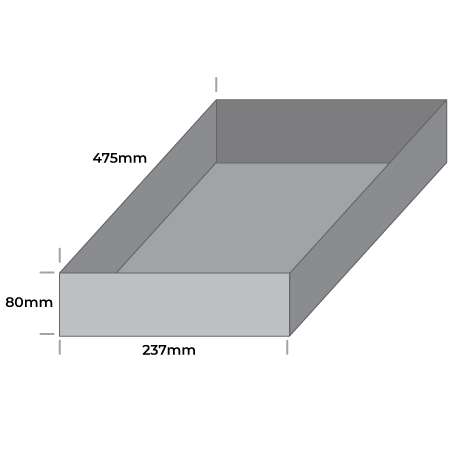
80 × 237 × 475 mm

Internal sleeve measurements

View dimensionsOfficial Commonwealth Vault illustration of the Small box and sleeve, internal sleeve measurements 80 × 237 × 475 mm

Suitable for

  • Original wills, certificates and A4 documents
  • Jewellery pouches and small watch cases
  • Family letters, photographs and spare passports
Order this box

Medium

Annual rental
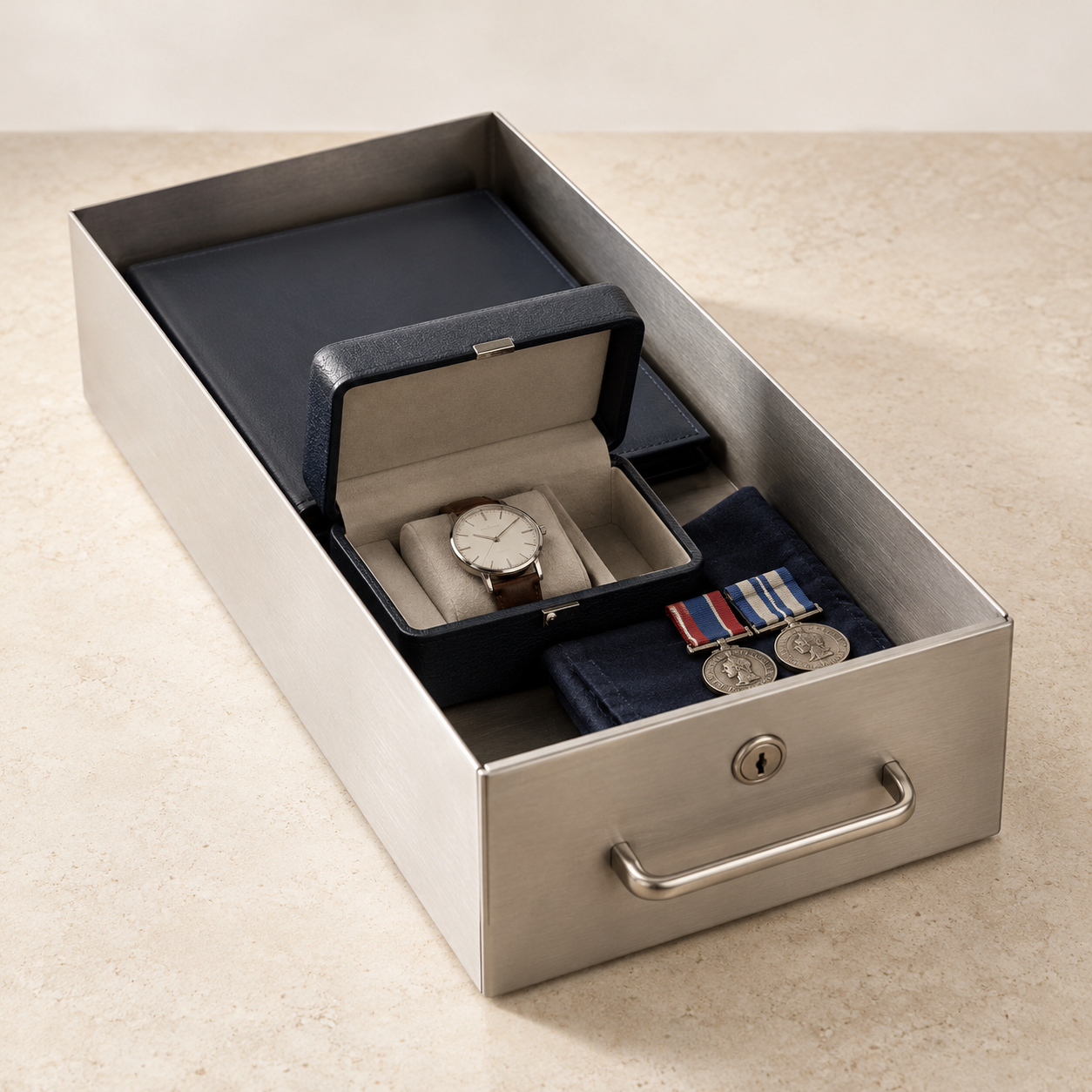
Representative image of a brushed-steel Medium box holding a document folder, an open watch case and two service medals
Representative image

NZ$650per annum

Indicative annual rental · NZD

More room for the pieces you have collected, inherited or put aside for the next generation.

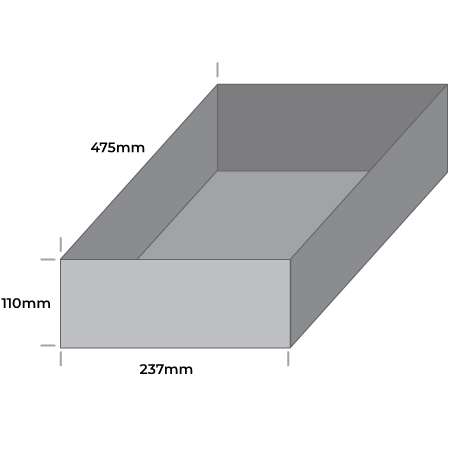
110 × 237 × 475 mm

Internal sleeve measurements

View dimensionsOfficial Commonwealth Vault illustration of the Medium box and sleeve, internal sleeve measurements 110 × 237 × 475 mm

Suitable for

  • Compact jewellery and watch cases
  • Medals, heirlooms and small collections
  • Document folders and portable backup drives
Order this box

Large

Annual rental
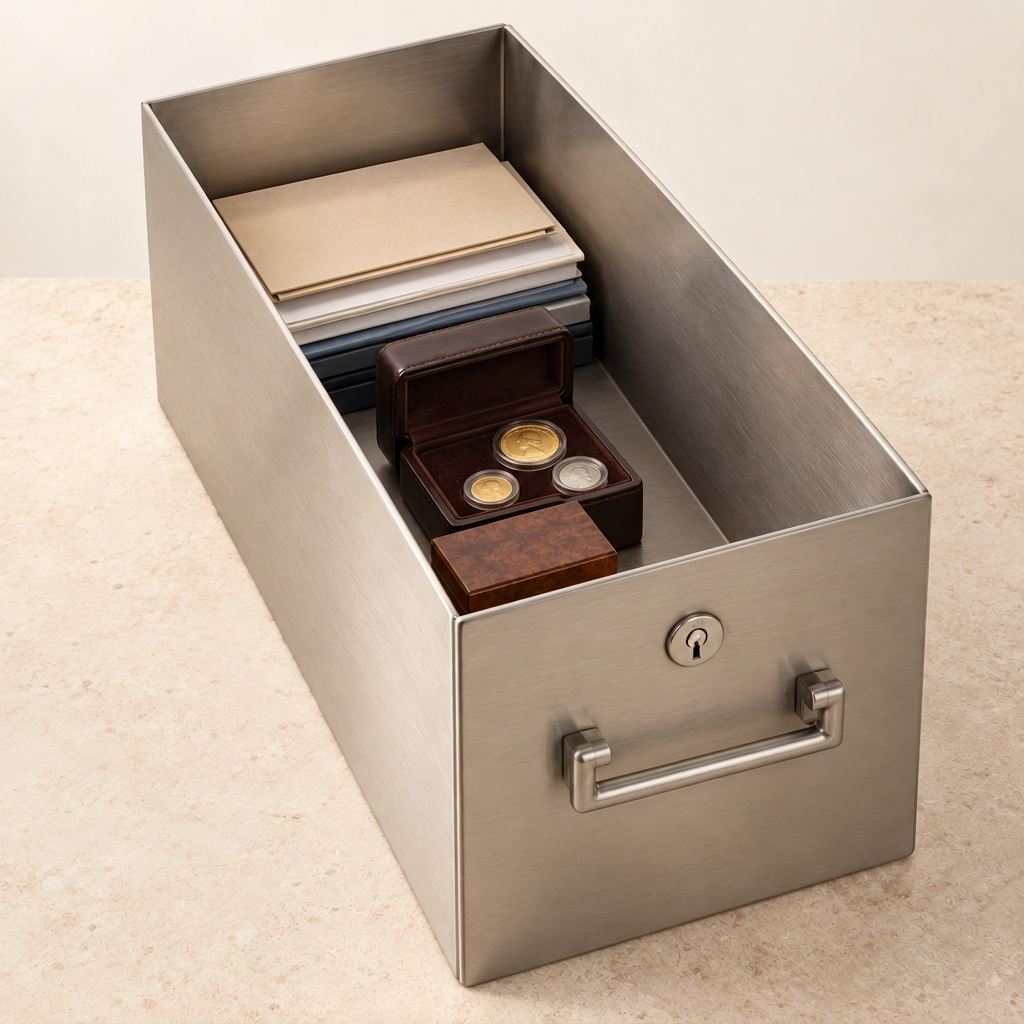
Close-up representative image of a large brushed-steel box holding stacked document folders, an open coin presentation case and a small timber keepsake case
Representative image

POA

Annual rental quote required

Bring important documents and larger personal collections together in one place.

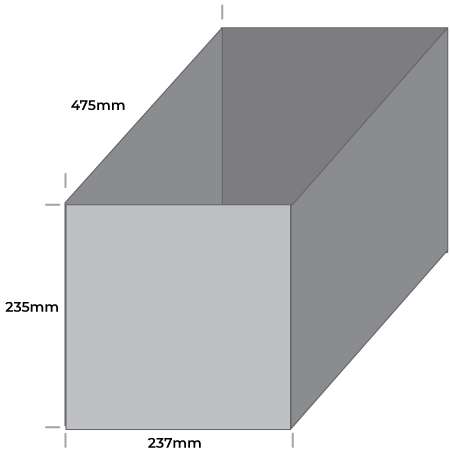
235 × 237 × 475 mm

Internal sleeve measurements

View dimensionsOfficial Commonwealth Vault illustration of the Large box and sleeve, internal sleeve measurements 235 × 237 × 475 mm

Suitable for

  • Document bundles and business records
  • Larger jewellery cases and keepsake collections
  • Coin collections and compact presentation cases
Order this box

Images illustrate storage uses. Actual boxes and contents may differ.

These are examples to help you choose. Check the measurements of your items and cases, or compare the boxes during a viewing.

Dimensions are the official published range’s internal sleeve measurements, shown in the published order. They do not independently confirm Hargreaves stock or availability. Check fit with the team.

Boxes come in a range of sizes, from slim drawers that suit a folder of documents to larger boxes for jewellery cases, collections or archive material. Most people underestimate how little space important documents take, and overestimate how much they need for jewellery once it is out of bulky display boxes.

The simplest approach is to start with what you are looking to protect. That tells us far more than a measurement, and it gives us something useful to talk about when you visit.

Storage checklist

What is still sitting at home or at the office?

Think beyond the obvious. Tick the items you have tucked away in drawers, cupboards or office files, then use the list to plan your viewing.

Your selections are a starting point, not a box-size recommendation. Bring measurements or photos of the cases to your viewing.

Keep urgent-use items within reach. Check access arrangements before storing a passport or original will, and confirm that your items are permitted and insured.

07Visiting

What happens when you come to see us.

  1. 1

    Arrange a time

    Book online or call. Viewings are by appointment so that someone is free to spend time with you, and there is no obligation.

  2. 2

    Arrive at Hargreaves Street

    You will be met at the entrance. Bring photo ID if you think you may want to go ahead on the day, but it is not required for a first visit.

  3. 3

    Talk through what you want to keep

    We will ask what you are hoping to protect and how often you expect to visit. If you have brought a list, or measurements, even better.

  4. 4

    See the vault and the boxes

    You can see the box sizes, the private rooms and the access arrangements, and ask anything you like.

  5. 5

    Decide in your own time

    Some people choose a box on the day. Many go away and think about it. Either is fine — we will send you a summary afterwards.

Location

Where to find us

Our Auckland facility is in St Marys Bay, a short distance from the city centre. Visits are by appointment, so someone is free to meet you when you arrive.

08Applying

Applying, and why we ask for identification.

Takes about

10–15 minutes for most people, once you have your ID to hand. [To confirm: confirm timing]

Like banks and other providers of secure storage, Commonwealth Vault is required to confirm the identity of its customers under New Zealand's anti-money laundering (AML/CFT) rules. It is the same kind of check you would complete when opening a bank account, and it protects customers as much as it protects the facility.

In practice it is straightforward. You will usually need a current photo ID, such as a passport or New Zealand driver licence, and proof of your address. Much of the process can be completed online before you collect your keys, so your visit to Hargreaves Street can focus on the box itself.

  1. 01
  2. 02
  3. 03
  4. 04
  5. 05

Online application, identity verification and payment will be available here in a later release. For now, these steps are completed with the team during or after your viewing.

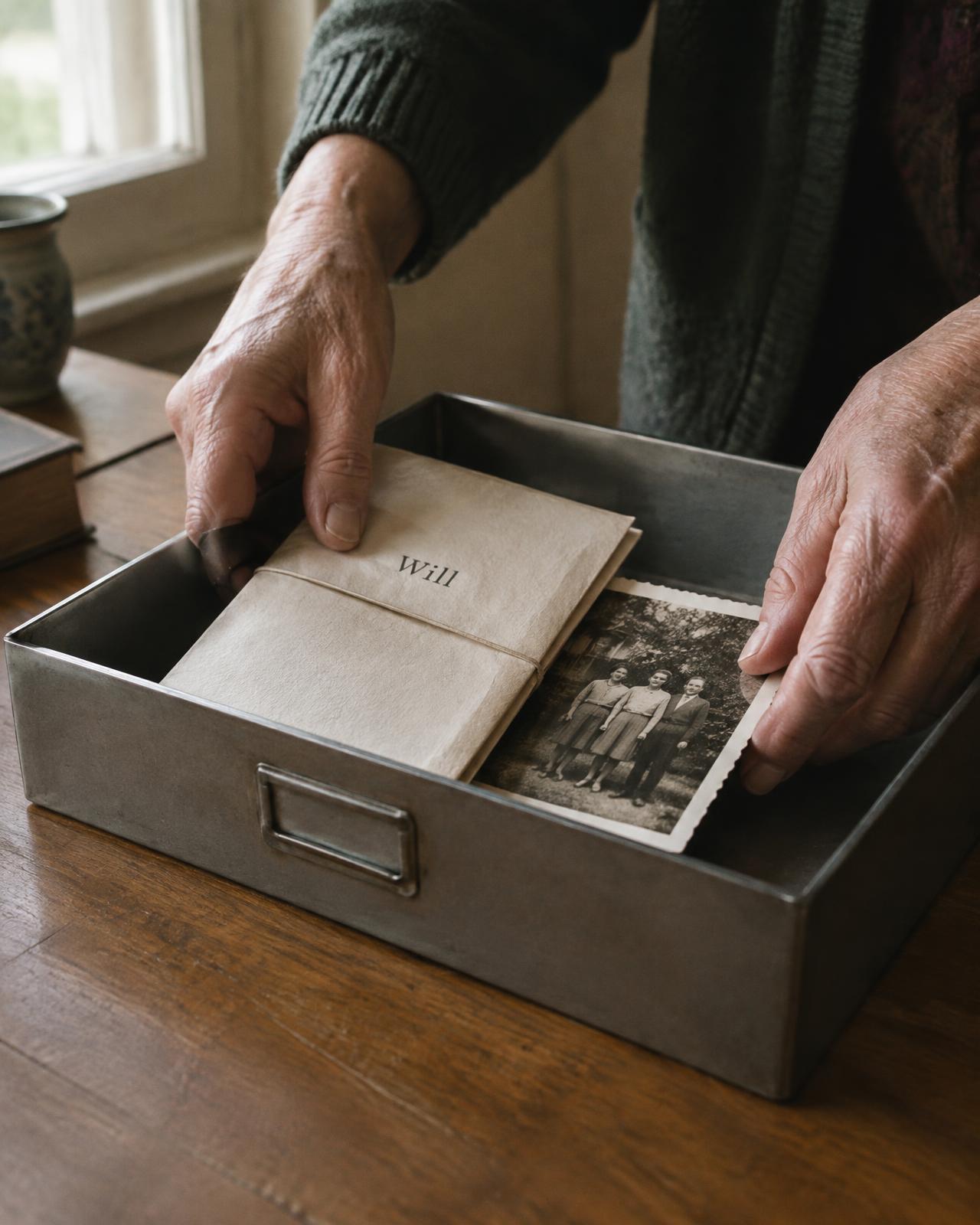
An older person's hands placing a sealed will and a family photograph into a deposit box tray.
Original wills and family photographs are among the most common things people store.Interim image — to be replaced with Hargreaves Street photography.
Commonwealth Vault protects the things that matter, not just expensive things.

09Questions

Common questions.

What can I store in a safety deposit box?

Most personal documents, jewellery, family items, business records, digital media and precious metals. A small number of things cannot be stored, such as anything hazardous, perishable or illegal. We will give you the full list when you apply.

How do I know which box size I need?

Start with what you want to keep, using the selector above if it helps. During a viewing you can see each size in person, and the team can suggest what tends to work for similar items.

Can I view the facility before committing?

Yes. Most customers do. Viewings are private, by appointment, and carry no obligation.

What identification will I need?

Usually a current passport or New Zealand driver licence and a recent proof of address. We will confirm exactly what is needed for your situation before you apply.

Who can access my box?

Only you and anyone you formally authorise. Every visitor is identified before a box is retrieved, and boxes are opened in private.

Can I change box size later?

Yes. If your needs change you can move to a different size, subject to availability. [To confirm: any change process or fees]

How does payment work?

[To confirm: billing period, accepted payment methods and pricing approach]

What happens after I apply?

Once your identity has been confirmed and payment arranged, we will set a time for you to collect your keys and make your first visit to the box.

Hargreaves Street · Auckland

Choose how you would like to begin.

Visit Hargreaves Street to see the facility and compare boxes, or begin with the online box-selection preview. Both paths let you consider the options before anything is confirmed.

Enquire by email

Before you decide

You can compare the options and talk through your requirements. A viewing does not require you to choose a box first.