Client review · Article demo
What to store in a safety deposit box
Original documents, jewellery you rarely wear and small family keepsakes are useful candidates for a safety deposit box. The deciding factor is how difficult an item would be to replace, balanced against how quickly you might need it.
A ring can be valued. The inscription inside it cannot be bought again. A birth certificate can be replaced, but that may be the last thing you want to organise a week before an overseas trip.
Start with a short list of the things you would struggle to lose. Then cross out anything you need at short notice. That leaves a more useful storage list than simply putting every valuable possession in the same place.
Important documents you do not use every day
A safety deposit box can give original paperwork a place away from the drawer where receipts, school notices and spare batteries accumulate. Think about documents whose originals matter and which you only need occasionally.
- Birth, marriage and citizenship certificates.
- Original agreements, signed records and important family paperwork.
- Paper records connected to a business or personal collection.
- Documents you want to keep separate from your everyday files.
Keep useful copies within reach
A scan can help you find a reference number or check a date without making a trip. Keep an organised copy where you can reach it, while remembering that a copy may not be accepted when an original is required.
Be more deliberate with passports and original wills. If you travel at short notice, a passport needs to be somewhere you can retrieve it in time. Before storing an original will, ask your lawyer where it should be kept and how the right person would obtain it when needed.
Jewellery and watches you wear occasionally
Some jewellery spends years in a bedside drawer between outings: an inherited ring, a wedding necklace, a watch kept for family occasions. These are the pieces worth considering for off-site storage.
Separate the jewellery you wear each week from the pieces you are keeping for later. You may prefer your everyday watch close at hand, with an inherited collection in a box.
Measure the case, not just the contents
A necklace may take very little room in a pouch and much more in its presentation case. The same is true of watches. Measure the packaging you intend to keep, protect delicate pieces from rubbing against each other, and check the available space before choosing a box.
The item you would miss most is not always the one with the highest price tag.
Family keepsakes and small collections
Medals, old letters, a few original photographs or a small coin collection can be worth protecting even when their resale value is modest. Choose the pieces that carry the story, rather than assuming the whole cupboard needs to move.
A practical example is a family collection split between two places: scanned photographs available to everyone, with selected originals and a set of medals kept together off-site. The folders and protective cases will help determine which box fits.
Precious metals and digital backups
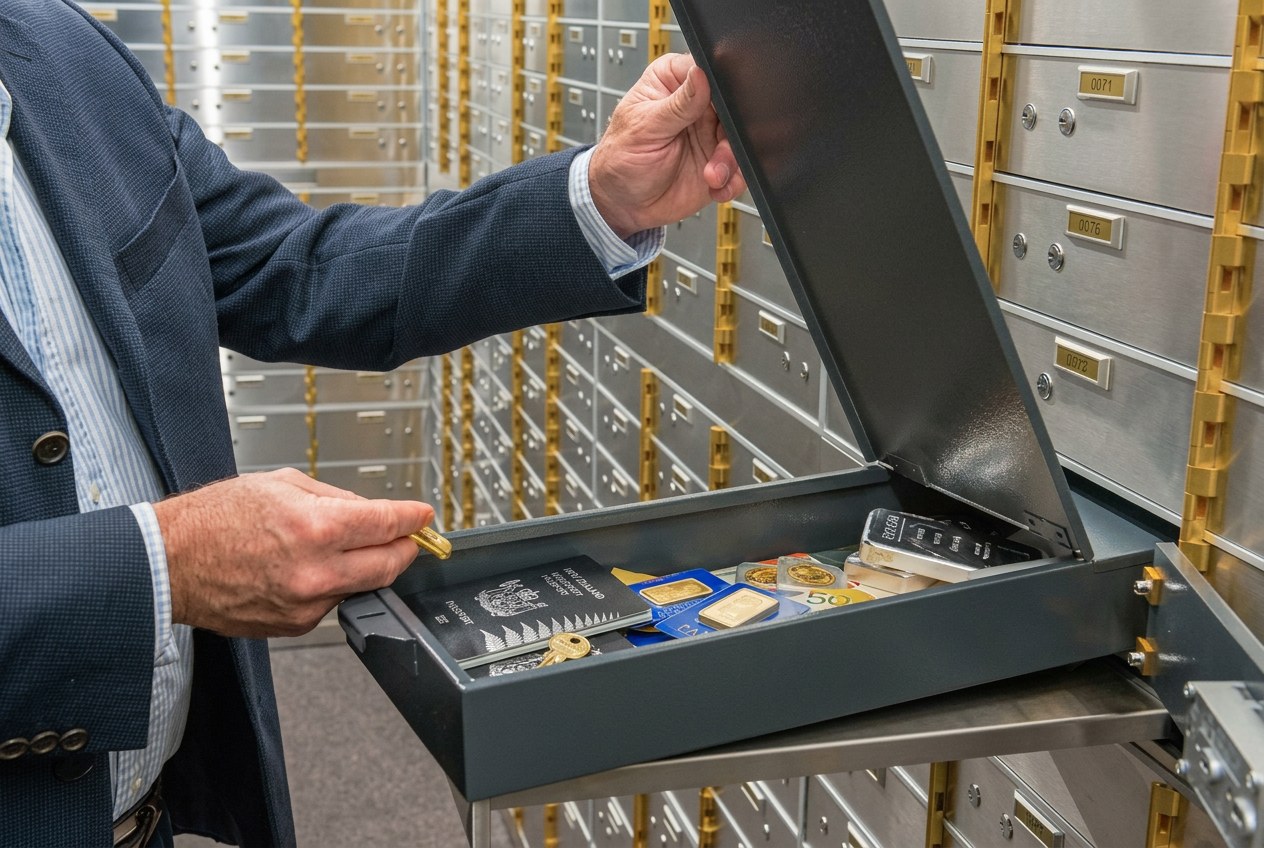
Gold, silver and collectible coins can also be considered, subject to the provider's storage rules and the box's capacity. Check the size and weight of your collection with the team, including protective packaging.
For digital files, an off-site USB drive or portable backup is only one part of a backup plan. A storage box does not stop a drive failing or make an old file readable. Keep another usable backup, test that you can open it, and manage passwords separately from the device.
What should stay accessible?
Think through an ordinary inconvenient moment: you need the item this evening, but you cannot get to the facility. If that would leave you stuck, reconsider where it belongs.
- A passport you may need for urgent travel.
- Documents someone may need immediately during an emergency.
- Everyday jewellery, keys or other items you use frequently.
- The only working copy of information you need to recover an account or device.
Check the facility's access arrangements before storing any time-sensitive item. Also consider who is authorised to retrieve it if you cannot attend yourself. A spare box key is not a substitute for completing the provider's authorisation process.
What cannot go in a safety deposit box?
Commonwealth Vault's published FAQ excludes explosive, dangerous, offensive, inflammable, corrosive, perishable and illegal items. Read the applicable storage rules before bringing anything unusual, and ask the team if you are unsure.
Secure storage also needs an insurance check. Commonwealth Vault states that its own insurance does not cover customers' box contents. Ask your insurer whether your items are covered at the facility and while you move them there; do not assume your existing policy includes that cover.
Make a storage list before you choose a size
You do not need a perfect inventory for your first conversation. A short list and a few measurements will make it much easier to compare the options.
- List the items and decide which originals you want to store.
- Measure folders, pouches and cases as you will actually pack them.
- Check when you may need each item and who should have access.
- Ask about size, capacity, current rental or purchase terms and insurance.
- Compare the boxes in person if you are uncertain about fit.
For the access process, read how safety deposit boxes work. If you are considering storage in Auckland, you can also see the Hargreaves Street facility and box options.
Storage checklist
What is still sitting at home or at the office?
Your selections are a starting point, not a box-size recommendation. Bring measurements or photos of the cases to your viewing.
Keep urgent-use items within reach. Check access arrangements before storing a passport or original will, and confirm that your items are permitted and insured.