
Client review · Article demo
Protect valuables from burglary: what would you miss most?
Think of three belongings you would hate to lose: a parent's watch, wedding jewellery, the medals or letters you have kept for family. Now think about where they are. Protecting valuables from burglary starts with that very ordinary question.
Picture an open drawer and an empty jewellery case. The necklace you kept for family celebrations is missing. Alongside reporting a theft, you are thinking about who gave it to you and the last time you wore it.
Perhaps the watch is in a bedside drawer. Perhaps wedding gold and dowry jewellery have stayed in the same cupboard since the last family celebration. Familiar places can become permanent storage without anyone making a deliberate decision about them.
Reviewing where you keep those pieces is a decision you can make now. Start with the possessions whose loss would leave a gap that buying something new would not fill.
What would a burglary take from your household?
A useful way to think about loss is to make two lists: what costs money to replace, and what carries meaning you cannot buy. Some belongings will appear on both.
- The watch your father wore, with marks you still recognise.
- Wedding jewellery given by people who are no longer here.
- Gold and small precious gifts kept for a future family occasion.
- Service medals, handwritten letters and original photographs.
- A collection built piece by piece over years.
The disruption reaches beyond the missing items
Manaaki Tāngata | Victim Support explains that a home burglary can affect a household's sense of safety as well as create financial and practical stress. Police reports, repairs and dealing with an insurance claim take time; irreplaceable items add another kind of loss.
That is why a protection plan should address the belongings and the household around them. If you have already experienced a burglary, it was not your fault. Support is available, and you can take practical steps at your own pace.
Your father's watch is still your father's watch, whatever an insurer values it at.
Start with practical burglary prevention at home
New Zealand Police recommends good-quality locks on doors and windows, keeping valuables out of sight, and retaining records such as receipts, valuations and serial numbers. Those are useful foundations whether you also use a home safe or off-site storage.
- Check doors, windows, sheds and garages are secured.
- Keep valuable items out of view from outside the home.
- Photograph distinctive jewellery, watches and other precious belongings.
- Keep receipts, valuations and serial numbers organised and accessible.
- Talk with trusted neighbours about looking out for one another.
If you are going away, the New Zealand Government's home-safety advice includes having a trusted person check the property and being careful about publicly posting holiday plans. Make arrangements before the last-minute rush to pack.
Record the details while you still have the item
A clear photograph of a watch, its serial number and the inscription on the back is easier to organise now than from memory afterwards. For jewellery, include the whole piece and distinctive details. Keep copies of those records somewhere you can reach if the belongings or your usual device are unavailable.
An inventory supports the practical work of identifying and documenting possessions. It is worth doing even for a keepsake with little resale value. Keep the record private rather than publishing your collection or where it is stored.
Which valuables need to stay at home?
Start with the things you actually use. Your everyday jewellery needs a storage arrangement that suits your routine. A rarely worn collection may give you more options.
For example, someone with several watches might keep the one they wear close at hand and consider off-site storage for inherited pieces. Wedding jewellery might only be needed for planned occasions. Separating those uses makes the decision easier.
A suitable, properly installed home safe can be part of the plan. Compare its specific protection, installation and insurance requirements with a safety deposit box. Avoid assuming that every product called a safe offers the same protection.
What does off-site storage change?
It changes where selected belongings are kept. An inherited necklace stored in a separate facility would not be in the house during a break-in there. You can still use home security measures for your household and the possessions that remain.
Off-site storage is worth considering for small items you rarely need and would struggle to lose: jewellery, a watch collection, bullion, family medals or selected original papers. It needs to work with your life, including access hours, transport, authorised users and the provider's storage rules.
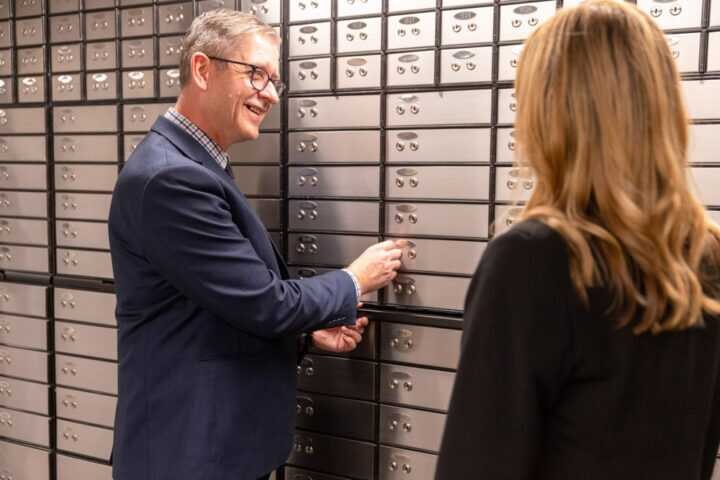
Ask to see the facility and compare actual box sizes. At Commonwealth Vault's Hargreaves Street site in Auckland, a viewing gives you a chance to discuss those practical questions before you choose.
Keep access and insurance in the plan
Keep urgent-use items accessible. Before storing a passport or an original will, check when it may be needed and who would be able to retrieve it.
Ask your insurer about the items and their storage location, including transport. Commonwealth Vault's FAQ states that its own insurance does not cover customers' box contents. Make cover a separate, confirmed part of your decision.
Make one storage decision this week
Choose a manageable starting point. Open the drawer or cupboard where your rarely used valuables are kept and write down what is there. Use the 26-item storage checklist if you need prompts.
- Identify the items you would struggle to replace.
- Decide which need frequent access and which do not.
- Photograph the items and organise any ownership records.
- Compare suitable home storage with off-site options.
- Measure cases and folders, then bring your list to a viewing.
You can begin with a conversation about one box and a few items. See the Hargreaves Street facility and compare the options against your list.
If a burglary has already happened
Prioritise your safety. If someone may still be on the property, do not enter or confront them. Call 111 if you or someone else is in immediate danger; for non-urgent reporting, use Police's 105 service. Victim Support's home-burglary guidance explains practical next steps and the support available.
Use the storage checklist to think through what you might bring to a viewing.